 Sunny Khurma
Cheif Editor
Sunny Khurma
Cheif Editor
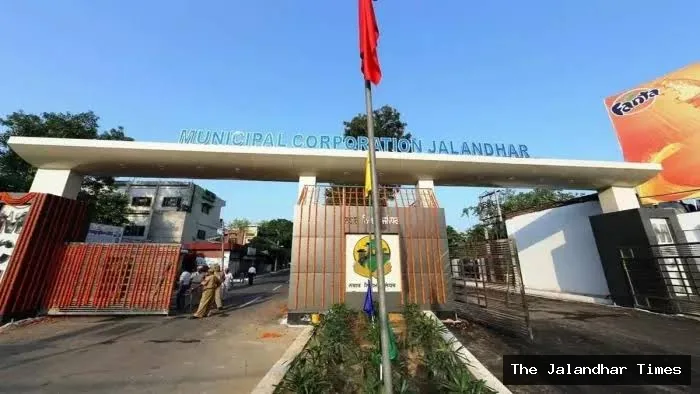
Jalandhar, October 4, 2026: Jalandhar Municipal Corporation’s drive to recover crores of rupees in pending dues from nearly 100 colonisers appears to have lost momentum, with criminal cases sought by the civic body yet to move forward even around three months after the matter was referred to police.
The case relates to colonisers who had applied for regularisation of their colonies under earlier government policies but allegedly failed to deposit the complete development charges and other amounts payable to the Municipal Corporation.
According to the action initiated by the civic body earlier this year, a list of around 100 such defaulting colonisers was prepared after scrutiny of pending payments.
The Municipal Corporation had initially warned the defaulters to clear their outstanding dues and indicated that legal action would follow if payments were not made.
When substantial dues reportedly remained unpaid, the matter was escalated.
Around three months ago, the Municipal Commissioner wrote to the Police Commissioner seeking registration of criminal cases against the identified colonisers under applicable provisions of the Bharatiya Nyaya Sanhita and the Punjab Apartment and Property Regulation Act.
A separate communication was also sent to the district administration recommending restrictions on registration and other property-related transactions involving vacant plots still owned by the concerned colonisers.
Despite these steps, no large-scale FIR action against the entire group had been reported by October 4.
The delay has now raised questions over how effectively the recovery drive is being pursued, particularly when the Municipal Corporation continues to face pressure to generate funds for roads, sewerage, sanitation and other development works across Jalandhar.
Why Do the Colonisers Owe Money?
The dispute dates back to policies introduced for regularisation of unauthorised colonies.
Under regularisation schemes introduced in 2013 and 2018, colonisers were required to apply to the authorities and pay prescribed development charges and other government fees.
A number of colonisers submitted applications and reportedly deposited only part of the required amount.
The remaining sums continued to appear as outstanding dues in Municipal Corporation records.
Over time, those unpaid amounts accumulated into crores of rupees.
The issue resurfaced this year when Mayor Vaneet Dhir pushed officials to recover old municipal dues and take action against persistent defaulters.
The civic body subsequently began checking colony-wise records to determine how much had been deposited and how much remained unpaid.
FIR Warning Had Been Issued Earlier
The Municipal Corporation had initially given defaulting colonisers an opportunity to clear their dues voluntarily.
Officials warned that criminal proceedings could be initiated if payments were not made within the prescribed period.
Some payments were received after the recovery campaign began, indicating that the pressure had produced limited results.
However, a large portion of the recovery reportedly remained pending, leading the corporation to send the list of defaulters to police for further action.
The fact that the issue remains unresolved months later has brought renewed attention to the follow-up process.
Property Transaction Restrictions Also Recommended
Apart from seeking FIRs, the Municipal Corporation also attempted to use property-related restrictions as a recovery mechanism.
The district administration was asked to consider preventing registration or other transactions involving unsold plots belonging to defaulting colonisers until their liabilities were settled.
Such a measure could significantly increase pressure on developers because unsold plots are often among the remaining commercial assets in a colony.
It remains unclear, however, how many properties have actually been subjected to such restrictions following the corporation’s communication.
Crores in Dues Could Support City Development
The recovery assumes greater importance because Jalandhar MC regularly faces demands for additional spending on basic infrastructure.
Residents continue to raise concerns over damaged roads, sewerage, drinking water, streetlights, sanitation and waste management.
Recovering old dues already payable to the corporation could provide additional resources for such civic works without creating a new financial burden on residents.
This is one reason the prolonged delay has attracted scrutiny.
If the Municipal Corporation has already identified the defaulters, calculated their liabilities and formally requested police and administrative action, the next question is why enforcement has remained slow.
Transparency Needed on Current Status
A clear public update from the Municipal Corporation could now help establish exactly where the recovery process stands.
The civic body could disclose how many colonisers were originally listed as defaulters, how much money was outstanding, how much has since been recovered, how many cases were referred to police and what action has been taken on the request to restrict property transactions.
Such disclosure would also distinguish cases in which dues have subsequently been cleared from those where liabilities remain outstanding.
It is important to note that being included on a recovery list or being recommended for an FIR does not by itself establish criminal guilt.
Any criminal liability would need to be determined through investigation and the legal process.
For the Municipal Corporation, however, the immediate issue is financial rather than political: crores of rupees reportedly remain recoverable while action initiated months ago has yet to reach a clear conclusion.
With Jalandhar requiring substantial funds for basic civic infrastructure, the outcome of the recovery campaign will now be closely watched.
For permission to reuse our original reporting or images, contact The Jalandhar Times.