 Sunny Khurma
Cheif Editor
Sunny Khurma
Cheif Editor
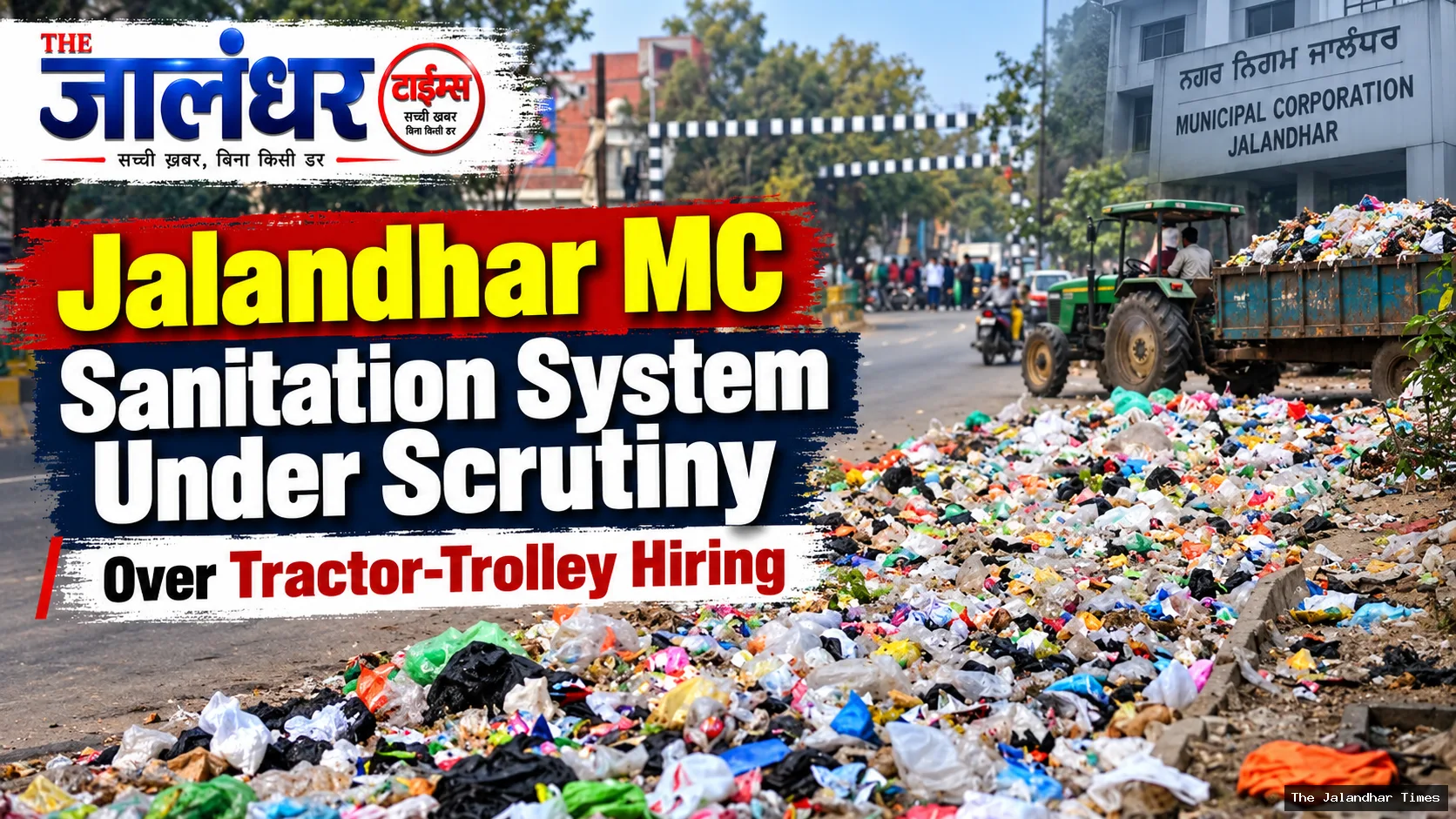
Jalandhar, October 3, 2026: Questions are being raised over the procurement process being used by Municipal Corporation Jalandhar for hiring tractor-trolleys to support garbage lifting and sanitation operations across the city.
Around 170 tractor-trolleys are reported to be deployed in different parts of Jalandhar, with concerns being raised that a substantial portion of the work has continued for months through quotation or sanction-based arrangements instead of a single completed long-term tender process.
The issue has gained attention because waste lifting is a regular municipal requirement involving significant expenditure and continuous deployment of vehicles, drivers and workers.
Municipal records show that the O&M wing had initiated open tendering for major sanitation-related vehicle contracts earlier this year.
In March, separate packages were floated for hiring tractor-trolleys, tippers, JCB machines, drivers and labour for garbage collection across different Assembly constituencies of Jalandhar.
One major package covering the Cantt constituency included 13 tractor-trolleys along with six tippers and three JCB machines for a one-year period, while another package for the Central constituency included 20 tractor-trolleys, two tippers and a JCB.
Some of these procurement processes, however, did not progress smoothly. At least one of the major tender packages was subsequently cancelled, while questions have since been raised over how sanitation services were continued during the intervening period.
Because garbage collection cannot simply be stopped while a tender dispute or procurement process remains unresolved, the civic body has continued arranging vehicles to maintain sanitation services.
The controversy centres on whether quotation and sanction-based arrangements intended for urgent or limited procurement have effectively become a substitute for regular competitive tendering over an extended period.
Punjab’s public procurement law allows government bodies to use a request-for-quotation method in specified circumstances, including certain low-value procurements and urgent maintenance or emergency requirements.
Such provisions are designed to ensure that essential public services do not stop merely because the normal tendering process takes longer.
The key question in Jalandhar is whether a recurring sanitation service involving a large number of vehicles and substantial cumulative expenditure should continue for months through such arrangements or whether a regular competitive contract should have been finalised sooner.
Concerns have also been raised that repeated short-term sanctions could reduce competition if the same limited group of contractors continues receiving work.
There is, however, no publicly established finding at this stage proving that any contractor received an illegal benefit or that municipal officials deliberately manipulated the process.
Those allegations would require examination of sanction orders, quotations received, contractor-wise payments, tender cancellation records and approvals issued by competent authorities.
Another area requiring clarification is monitoring of the vehicles actually performing sanitation work.
Questions have been raised over reports that some tractor-trolleys may not have GPS equipment even though municipal authorities have introduced monitoring mechanisms to check vehicle movement and garbage-lifting operations.
Where GPS tracking is required under the work arrangement, payment records would need to establish how attendance, routes and actual deployment were verified for vehicles without active tracking.
The controversy comes even as Jalandhar Municipal Corporation continues efforts to improve garbage lifting across the city.
Residents in several areas have seen more tractor-trolleys deployed for waste removal, and the additional vehicles have helped municipal teams respond to garbage accumulation at roadsides and dumping points.
The debate is therefore not simply about whether the vehicles are needed. The larger issue is whether essential sanitation work is being procured through a transparent, competitive and financially accountable system.
The corporation now faces calls for greater clarity on how many tractor-trolleys are currently operating, how many are working under regular tenders, how many are being hired through quotation or sanction arrangements, which contractors are receiving payments and how much has been spent during the past six months.
A clear disclosure of these figures would help distinguish routine emergency procurement from long-term contractual work and address concerns over the use of public funds.
Municipal officials are also expected to complete pending tender processes so that sanitation operations can continue without uncertainty over procurement procedures.
For Jalandhar residents, uninterrupted garbage collection remains essential. At the same time, transparency in how crores of rupees of municipal sanitation expenditure is sanctioned, monitored and paid is equally important.
The matter now centres on whether the corporation can maintain both objectives — keeping the city clean while ensuring that vehicle-hiring contracts remain competitive, properly monitored and transparent.
For permission to reuse our original reporting or images, contact The Jalandhar Times.