 Sunny Khurma
Cheif Editor
Sunny Khurma
Cheif Editor
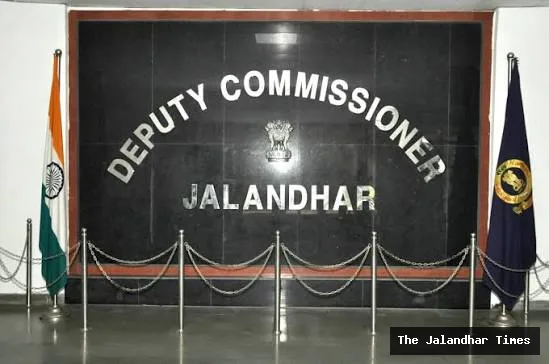
Jalandhar, October 5, 2026: The Jalandhar district administration has issued fresh restrictions aimed at controlling noise pollution, bringing marriage palaces, public places, religious venues and motorists under stricter scrutiny.
The directions have been issued under the Noise Pollution (Regulation and Control) Rules, 2000 along with powers available under Section 163 of the Bharatiya Nagarik Suraksha Sanhita, 2023.
According to the order, loudspeakers and public-address systems being used at marriage palaces, public venues and religious places will have to remain within the prescribed noise limits.
The administration has also imposed restrictions on the use of pressure horns in buses, cars, motorcycles and other vehicles.
What Is the Actual Loudspeaker Limit?
The rule is sometimes incorrectly described as requiring loudspeakers to remain below 10 decibels.
That is not the legal standard.
At the boundary of a public place where a loudspeaker, public-address system or another sound source is being used, the noise level cannot exceed 10 dB(A) above the ambient noise standard applicable to that area or 75 dB(A), whichever is lower.
This means the permitted limit depends partly on whether the location falls in a residential, commercial, industrial or silence-zone category.
Privately operated sound systems are also subject to separate boundary-level restrictions.
Marriage Palaces and Religious Places Covered
The directions apply to venues where amplified sound can affect nearby residents, including marriage palaces and other public functions.
Religious institutions using loudspeakers are also required to comply with prescribed noise limits and permission requirements.
The objective is to prevent excessive sound from causing disturbance to people living around such locations.
Organisers will therefore have to ensure that DJ systems, speakers and other amplified equipment are operated within legally permitted limits.
Night-Time Loudspeaker Restrictions Remain Important
Noise regulations impose particularly strict controls during night hours.
As a general rule, loudspeakers and public-address systems cannot be operated between 10 PM and 6 AM, subject to specific exceptions permitted under the law.
Closed premises such as auditoriums, conference rooms, community halls and banquet halls are governed by applicable noise norms, while limited exemptions can also be notified for specified cultural or religious occasions.
The latest district directions are intended to strengthen enforcement of these existing restrictions.
Pressure Horns Under Crackdown
Vehicle owners are another major focus of the order.
The administration has directed that pressure horns should not be used on buses, cars, motorcycles or other categories of vehicles covered by the district restrictions.
Pressure horns are a frequent source of excessive road noise and can create particular disturbance around hospitals, schools, residential neighbourhoods and other sensitive locations.
Traffic and enforcement teams can take action where vehicles are found violating the applicable directions.
Drivers have therefore been advised to use only legally permitted horns and avoid unnecessary honking.
Silence Zones Get Stronger Protection
Noise rules provide additional protection to designated silence zones.
Areas around hospitals, educational institutions, courts and other officially notified sensitive locations can fall under stricter noise standards.
The use of loud horns, amplified music and other high-noise equipment in such areas can attract action under applicable environmental and administrative rules.
The administration’s latest directions are expected to strengthen enforcement at such locations across Jalandhar district.
Why the Administration Has Issued the Order
Excessive noise has become a recurring complaint in growing urban areas.
Marriage functions, DJs, vehicle horns, public events and amplified religious programmes can create disturbances when sound levels exceed permissible limits.
The administration’s action is aimed at balancing the right to hold social and religious programmes with the right of nearby residents to a peaceful environment.
The restrictions also seek to reduce unnecessary horn use on city roads.
Violations Can Invite Legal Action
Marriage palace operators, event organisers, religious institutions and vehicle owners are expected to comply with the directions.
Authorities can intervene where noise exceeds permissible standards or where sound systems are used in violation of night-time restrictions.
Complaints regarding excessive noise can also be reported to the competent authorities for verification and enforcement.
How Long Will the Orders Remain in Force?
The restrictions have been issued as a district-level prohibitory order under Section 163 of the BNSS and will remain applicable for the validity period specified in the administration’s notification.
The exact expiry date should be taken from the signed district order itself before publication, as the current order copy was not independently available online at the time of this report.
Residents, marriage palace operators and motorists have been advised to follow the restrictions while the order remains in effect.
For Jalandhar, the message from the administration is clear: celebrations and everyday travel can continue, but excessive and avoidable noise will face stricter enforcement.
For permission to reuse our original reporting or images, contact The Jalandhar Times.