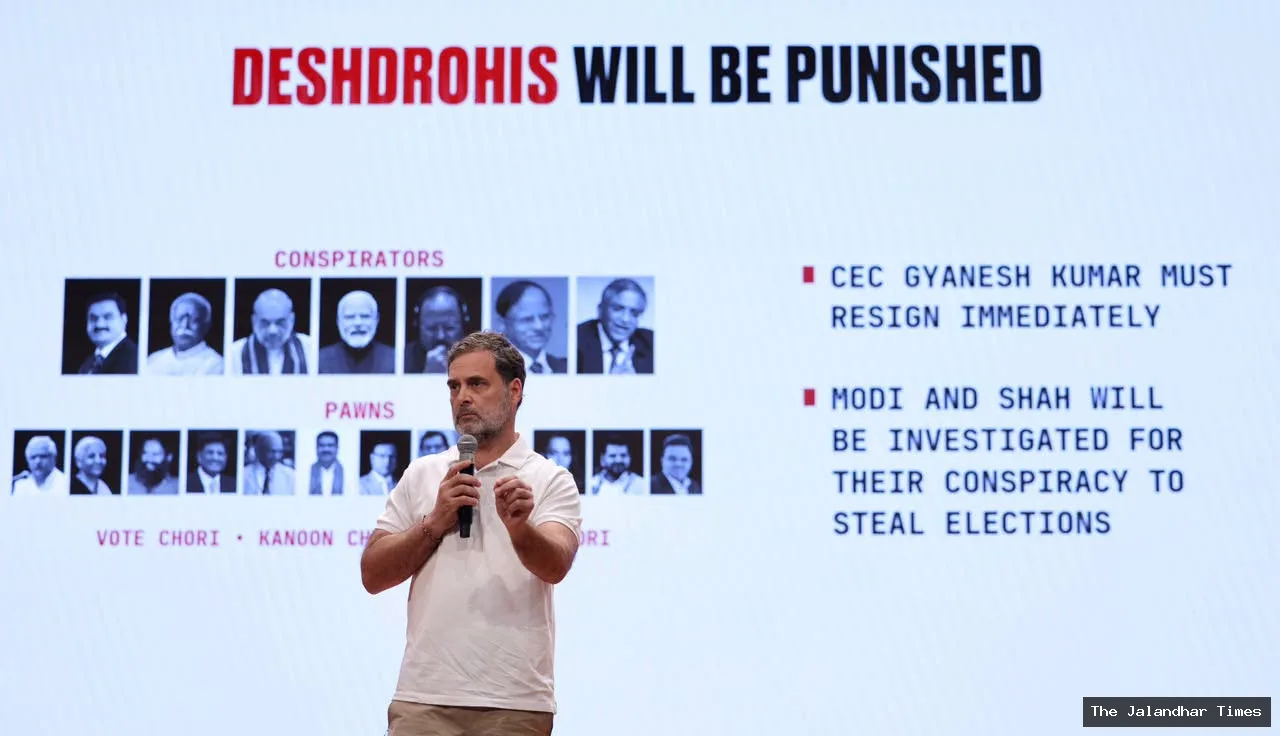
New Delhi, October 5, 2026: Leader of Opposition in the Lok Sabha Rahul Gandhi on Monday launched a fresh attack on Chief Election Commissioner Gyanesh Kumar, alleging that changes to voter-registration Form 6 were made illegally and unilaterally and accusing the poll chief of misusing his position to benefit the Bharatiya Janata Party.
The allegation came after the Supreme Court raised questions over modifications made to Form 6 and clarified during proceedings that it had not approved a modified version of the statutory voter-registration form.
Rahul Gandhi claimed that the court’s observations strengthened his allegations regarding the manner in which the form was changed.
However, the Supreme Court has not concluded that Gyanesh Kumar personally made an illegal alteration or that the changes were intended to benefit any political party.
The court has instead sought records so it can examine who authorised the modification and whether the decisions were taken in accordance with law.
What Rahul Gandhi Alleged
Rahul Gandhi said it was now clear, in his view, that Form 6 had been changed without proper legal authority.
He further alleged that the Chief Election Commissioner had abused his official position to help the BJP.
Gandhi also demanded accountability from those he believes were involved in the changes.
His allegations form part of a broader political confrontation over electoral-roll revisions and the functioning of the Election Commission.
The BJP and the Election Commission have disputed opposition allegations that electoral-roll changes were designed to favour the ruling party.
What Is Form 6?
Form 6 is used by eligible citizens seeking inclusion of their names in the electoral roll, including first-time voters and other eligible applicants seeking registration.
The present dispute concerns changes connected with the Special Intensive Revision process and an additional declaration linked to voter-registration requirements.
Questions have been raised over whether such changes could be introduced administratively or required a different legal process.
The issue is now before the Supreme Court.
Supreme Court Says It Did Not Approve Modified Form
During Monday’s hearing, a Bench headed by Chief Justice of India Surya Kant, along with Justices Joymalya Bagchi and V. Mohana, made it clear that the court had not approved any modified version of Form 6.
The Bench indicated that it wanted to examine the relevant records to establish who made the modification and under what authority.
The court issued notices in proceedings challenging a series of decisions connected with the functioning of the Election Commission.
Petitioners have alleged that some significant decisions were taken without the required involvement or agreement of the other Election Commissioners.
Those allegations have not yet been finally decided by the court.
The Supreme Court also declined to issue an interim order preventing Gyanesh Kumar from performing his duties or taking decisions while the petitions remain pending.
Election Commission Calls Rahul Gandhi’s Claim Misleading
The Election Commission responded to Rahul Gandhi’s allegations later on Monday and described his interpretation as misleading.
According to the Commission, the order for the Special Intensive Revision exercise issued on June 24, 2025 had been approved unanimously by the Election Commission.
It also maintained that the SIR order had subsequently been upheld by the Supreme Court.
The Commission therefore disputed the suggestion that Gyanesh Kumar had acted alone in initiating the revision process.
The present controversy, however, includes a narrower question about the modification of Form 6 itself, which the Supreme Court has said it will examine after reviewing the records.
Important Difference Between SIR Order and Form 6 Change
The distinction between these two issues is important.
One issue concerns whether the overall Special Intensive Revision exercise was legally valid.
A separate question concerns who authorised changes to the version of Form 6 used during the process and whether those changes complied with the statutory framework.
The Election Commission points to the unanimous approval of the wider SIR exercise.
The Supreme Court, meanwhile, has specifically sought clarity regarding the modification of Form 6.
That question remains under judicial examination.
Congress Steps Up Attack on Election Commission
Rahul Gandhi’s statement is the latest in a series of attacks by Congress leaders on the Election Commission over voter rolls and election procedures.
Congress leaders have alleged that decisions relating to electoral rolls could exclude genuine voters and have demanded greater transparency in the revision process.
They have also questioned whether all major decisions within the Election Commission were made collectively.
These remain political allegations and are strongly contested.
No judicial finding has established that the Election Commission manipulated electoral rolls to benefit the BJP.
Supreme Court to Examine Decision-Making Process
The Supreme Court proceedings could become significant because the Bench has indicated that it will examine both the records relating to Form 6 and questions surrounding decision-making within the Election Commission.
The court has said that if a decision is found to be contrary to law, it has the power to examine and deal with it appropriately.
At the same time, the Bench has not accepted requests for immediate action against the Chief Election Commissioner before hearing the responses of the concerned parties.
This means the case remains open and no final conclusion has been reached regarding the legality of the disputed Form 6 modification.
Political Battle Likely to Continue
The controversy has intensified the ongoing political debate over electoral-roll revisions.
Rahul Gandhi and Congress have framed the issue as one of electoral transparency and institutional accountability.
The Election Commission, on the other hand, has rejected claims that the process was conducted unilaterally and maintains that the broader revision exercise followed an approved procedure.
The legal dispute will now depend on the documents and decision-making records placed before the Supreme Court.
Until those records are examined and the court gives its final findings, allegations that Gyanesh Kumar personally changed Form 6 illegally or did so to benefit the BJP remain political accusations rather than established facts.
The next phase of the case is expected to provide greater clarity on who authorised the disputed changes and whether the required legal and institutional procedures were followed.
For permission to reuse our original reporting or images, contact The Jalandhar Times.