 Sunny Khurma
Cheif Editor
Sunny Khurma
Cheif Editor
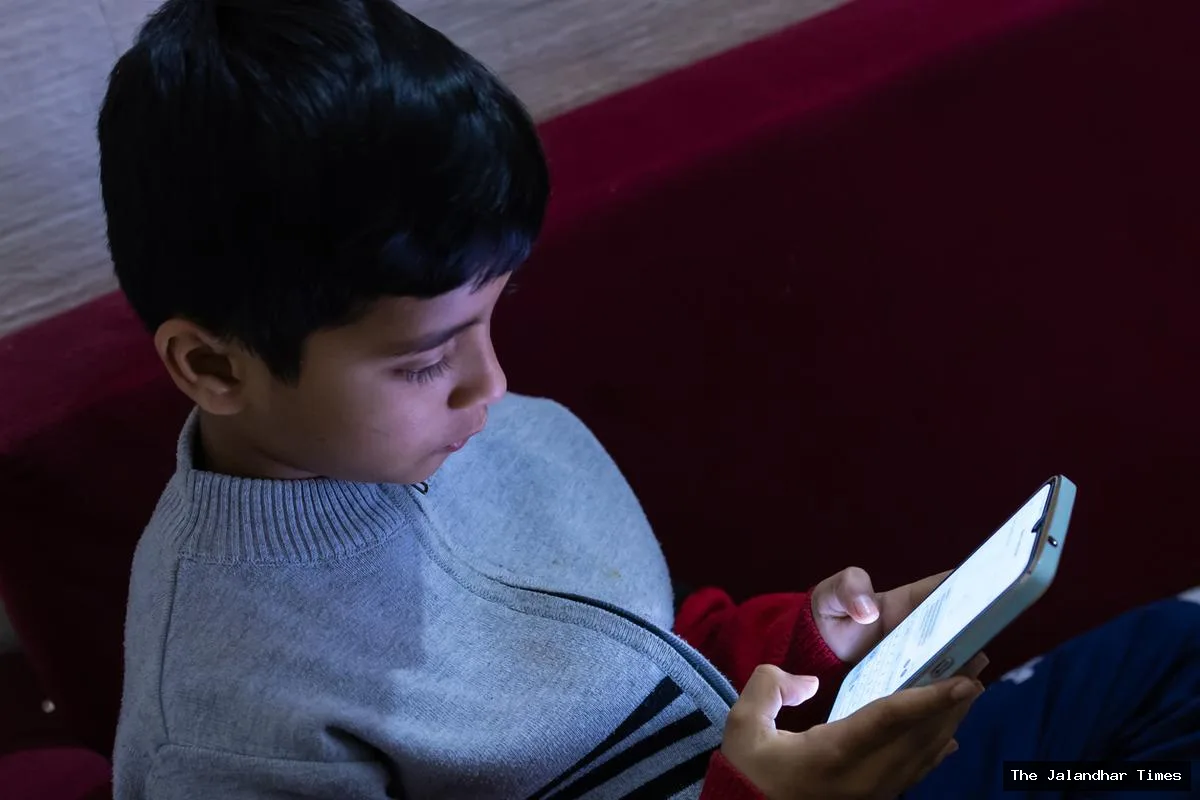
New Delhi, October 1, 2026: The debate over children’s access to social media is gaining momentum in India as concerns grow over cyberbullying, addictive online behaviour, harmful content and the collection of minors’ personal data.
The issue has moved into sharper focus after the Supreme Court asked the Central government to examine whether stronger statutory safeguards are needed for children using social-media and other digital platforms.
However, India has not announced a blanket ban on social media for everyone under the age of 18. The government has clarified that no such proposal is currently under consideration, making it important to distinguish between a discussion on stronger safeguards and an already-decided nationwide prohibition.
The central question is how India can protect children online without introducing measures that create additional privacy, security or enforcement problems.
Child-safety advocates have long raised concerns over the amount of time young users spend on social platforms and their potential exposure to cyberbullying, inappropriate content, online exploitation and engagement-driven algorithms.
Experts broadly agree that platforms should provide stronger protections for younger users, but there is less agreement over whether completely preventing minors from maintaining social-media accounts would be the most effective solution.
One of the biggest challenges is age verification.
If platforms are required to establish whether a user is above or below a certain age, they need a reliable method of verification. Simply asking users to enter their date of birth can be easily bypassed.
More stringent systems could involve identity documents, digital verification services or other age-assurance technology. While these approaches can make age restrictions more effective, they also raise concerns about how much personal information users may have to provide.
Collecting identity information simply to access social media could create new privacy risks, particularly if sensitive information is stored by private platforms.
Cybersecurity specialists therefore argue that an ideal age-checking mechanism should confirm whether a person meets an age requirement without revealing unnecessary personal information.
For example, a platform might only need to know whether a person is above the required age rather than receiving their complete identity document, date of birth or identification number.
Another concern is the creation of large databases identifying children.
Such information would require exceptionally strong protection because databases confirming that particular users are minors could become attractive targets for cybercriminals and others seeking to exploit children online.
Enforcement presents another major challenge.
International experience shows that age restrictions can result in millions of underage accounts being removed, but they do not necessarily prevent every young person from returning to social platforms.
Some teenagers may enter false ages, use accounts belonging to older family members or migrate toward smaller platforms where protections may be weaker.
This creates a difficult policy question: if strict regulation pushes minors away from large, closely monitored services and towards less regulated corners of the internet, some online risks could become harder for parents and authorities to detect.
India’s enormous internet population would make implementation particularly complex.
Any nationwide age-assurance system would need to operate across hundreds of millions of users, multiple languages, different levels of digital literacy and widely varying access to identity and technology.
The issue also goes beyond social networking.
Online platforms are increasingly used by students for education, communication, creative expression, news, professional learning and participation in communities. Policymakers would therefore need to clearly define which services fall under any future restrictions and which educational or communication services should remain accessible.
India’s Digital Personal Data Protection framework already provides an important foundation for protecting children online.
Under the law, a person below 18 is treated as a child for data-protection purposes. The framework requires verifiable parental consent in situations involving the processing of children's personal data and places restrictions on practices such as behavioural monitoring and targeted advertising directed at children.
The current debate is therefore increasingly focused on whether additional rules are necessary specifically for social-media accounts and how those rules could be implemented without weakening privacy.
One possible approach would be to place greater responsibility on platforms rather than children or their parents.
This could include stricter default privacy settings for young users, limitations on personalised recommendation systems, stronger reporting mechanisms, restrictions on targeted advertising and better detection of harmful or exploitative content.
Another approach could involve graduated protections according to age rather than a single rule covering everyone below 18.
Supporters of stronger restrictions argue that technology companies should not be able to build systems that maximise engagement among children without also taking responsibility for their safety.
Critics of blanket bans, however, warn that prohibition alone cannot solve the problem and could create a false sense of security if children simply find other ways to access social networks.
The international experience offers useful lessons.
Australia introduced restrictions requiring certain social-media platforms to take reasonable steps to prevent users below 16 from holding accounts. Other countries have also explored or introduced age-based controls as governments worldwide reassess how children interact with social platforms.
For India, the challenge will be finding a system that protects children while preserving privacy, access to useful digital resources and freedom from unnecessary surveillance.
The debate is therefore no longer simply about whether children need stronger protection online. There is broad recognition that they do.
The more difficult question is how India can provide that protection without creating a system that is easy to bypass, intrusive for ordinary users or risky for the very children it is intended to protect.
For permission to reuse our original reporting or images, contact The Jalandhar Times.