
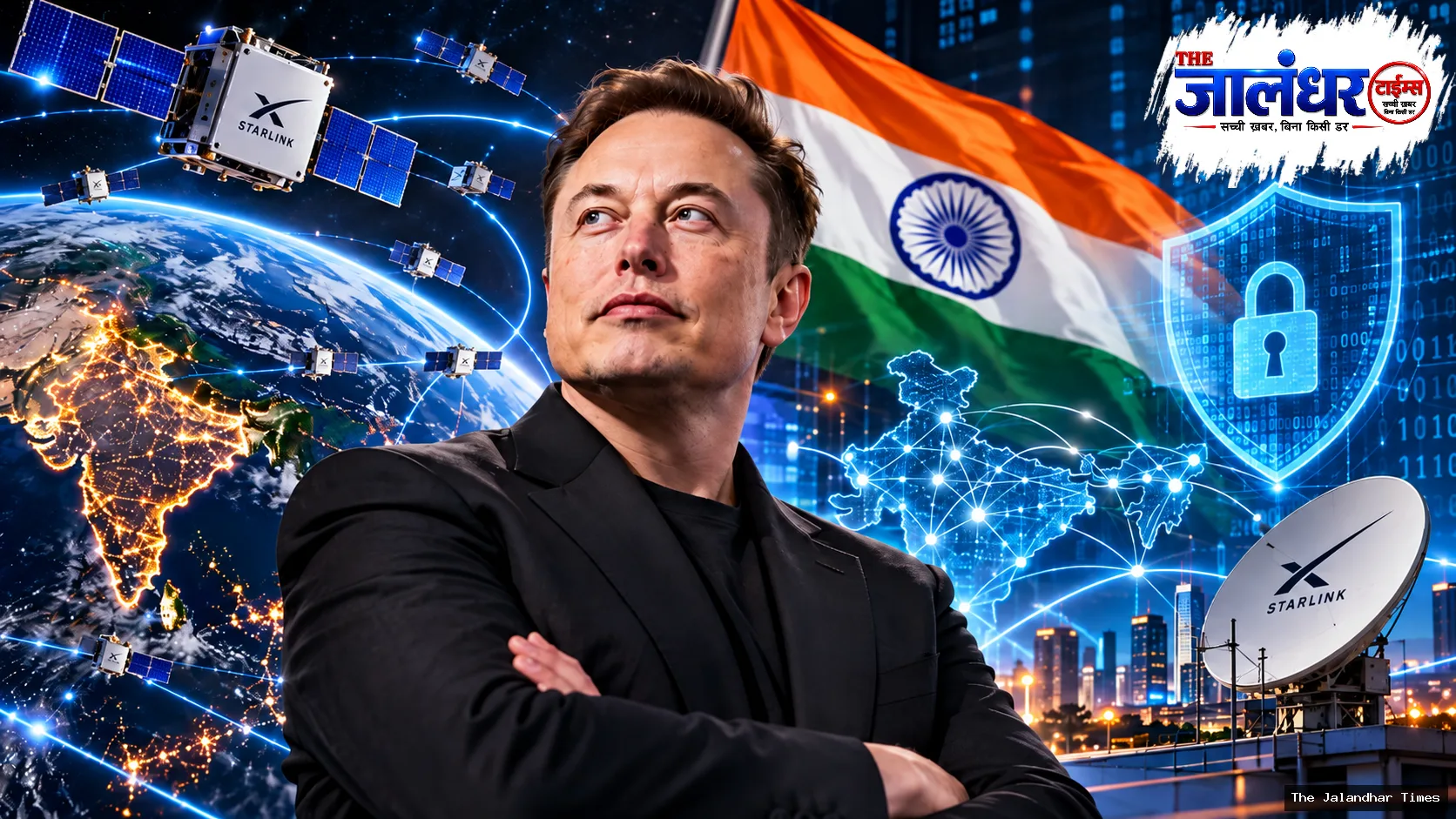
New Delhi, October 9, 2026: The Indian government has sent a clear message amid the growing controversy surrounding Elon Musk-owned Starlink’s delayed commercial launch in the country: national security and regulatory requirements must be completed before satellite internet services can begin.
The response comes after Musk publicly questioned why Starlink was still unable to start commercial operations in India despite spending years working to comply with the country’s laws and regulatory requirements. He also alleged that powerful business interests were attempting to delay the company’s entry in order to protect their position in the Indian market.
The Centre has rejected those allegations, maintaining that India’s regulatory framework for satellite communication services is fair and non-discriminatory. Government officials have said Starlink is not being treated differently from other companies seeking to provide satellite-based internet services in the country.
Starlink has already secured the principal satellite communication authorisations required to operate in India. However, receiving a licence does not automatically allow the company to begin selling commercial broadband services to customers.
The remaining process includes compliance with national security requirements and allocation of the necessary spectrum. Similar conditions also apply to other licensed satellite communication operators, including Jio Satellite Communications and Bharti-backed Eutelsat OneWeb.
Starlink says it has already built significant infrastructure in preparation for an India launch. A senior SpaceX executive said this week that the company had developed its Indian operations around local security and regulatory requirements and established around 20 gateway sites containing hundreds of antennas.
The company has also said Indian users’ data would remain within India and that controls had been designed specifically to meet the country’s security requirements.
Despite those preparations, commercial operations remain on hold while authorities complete their assessment. Security has been one of the central issues surrounding the approval of satellite internet because services such as Starlink differ technically from conventional mobile and fibre networks.
Satellite broadband can provide internet access directly through a constellation of satellites in low-Earth orbit, making it particularly useful in rural, mountainous and remote regions where traditional telecom infrastructure may be difficult or expensive to build.
For Indian regulators, however, the technology also creates security and monitoring requirements that must be addressed before widespread commercial use is allowed. Authorities have therefore maintained that compliance with national security conditions cannot be bypassed simply to accelerate the launch.
The controversy escalated after Musk alleged that “certain oligarchs” were blocking Starlink’s entry into India to preserve monopolistic control. The Indian government rejected the suggestion, saying companies seeking to provide satellite communication services are being processed under the same regulatory framework.
Musk later intensified the exchange by questioning why Starlink remained unable to begin operations even though the service is available in more than 165 countries and the company says it has spent around five years complying with Indian requirements.
His comments also triggered a political exchange after Congress leader Rahul Gandhi responded publicly to Musk. The political debate, however, remains separate from the formal regulatory process that will determine when Starlink can begin commercial operations.
India has previously decided that satellite spectrum will be assigned administratively rather than through a traditional auction. The approach is intended to reflect the technical characteristics of satellite spectrum while still requiring operators to pay charges set under the regulatory framework.
For consumers waiting for Starlink, the latest government response does not mean that the service has been rejected. Instead, it makes clear that the company must complete the final regulatory steps before accepting customers and switching on commercial operations.
Starlink has positioned India as an important potential market, particularly because satellite broadband could help connect areas where traditional fixed or mobile networks remain limited. The company has also entered into agreements with major Indian telecom operators as it prepares for an eventual launch.
The timing of commercial operations will therefore depend on completion of the security assessment and spectrum assignment rather than simply on whether Starlink possesses a basic licence.
For now, the government’s position remains firm: competition and new technology are welcome, but the same regulatory and security conditions will apply to every satellite service provider seeking access to the Indian market.
The Starlink debate is consequently no longer simply about whether Elon Musk’s company will enter India, but about how quickly it can satisfy the remaining requirements before one of the world’s largest potential satellite-internet markets opens to commercial service.
For permission to reuse our original reporting or images, contact The Jalandhar Times.