 Sunny Khurma
Cheif Editor
Sunny Khurma
Cheif Editor
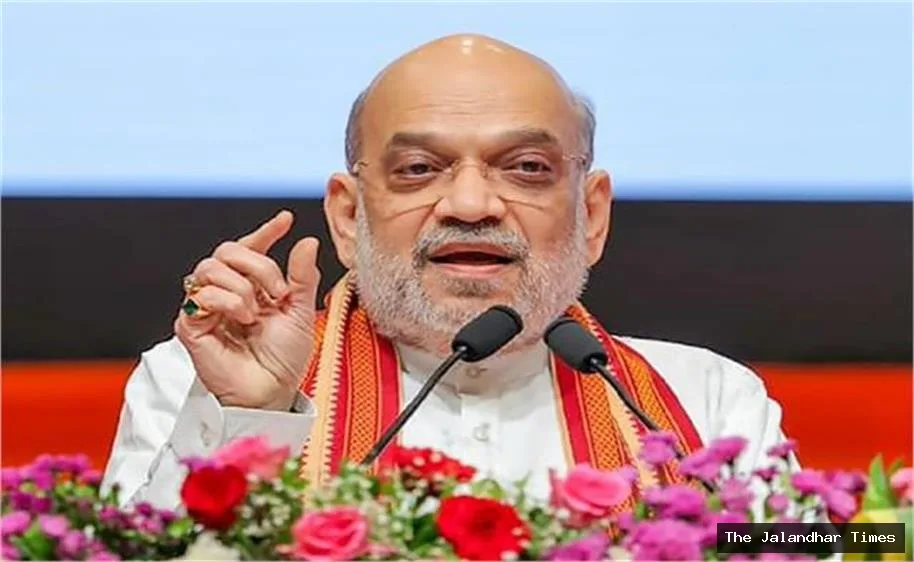
Bhopal, October 3, 2026: Union Home Minister Amit Shah on Saturday said India’s new criminal justice framework is being developed with the aim of ending prolonged delays in criminal cases, with the government targeting completion of the process from registration of an FIR to final disposal at the Supreme Court within around three years.
Shah made the remarks in Bhopal after inaugurating an exhibition highlighting the functioning of India’s three new criminal laws. He said the justice system had for decades been associated with repeated delays and lengthy proceedings, but the new framework seeks to introduce strict timelines at important stages of investigation and trial.
According to Shah, approximately another year and a half of implementation work is expected before the new system becomes fully operational across all parts of the criminal justice chain.
He said that once this process is completed, the government wants cases registered under the new framework to move from the FIR stage through investigation, trial and appeals much faster than under the previous system.
The three laws at the centre of the reforms are the Bharatiya Nyaya Sanhita, 2023, the Bharatiya Nagarik Suraksha Sanhita, 2023, and the Bharatiya Sakshya Adhiniyam, 2023. They came into force nationwide on July 1, 2024, replacing the Indian Penal Code, Code of Criminal Procedure and Indian Evidence Act respectively.
A major feature of the new framework is the introduction of deadlines for several stages of criminal proceedings.
The rules provide, among other timelines, up to 14 days for certain preliminary inquiries, 90 days for specified further investigations, 60 days for filing discharge applications, 60 days for framing charges in relevant proceedings and 45 days for pronouncement of judgment after completion of trial.
The new framework also limits routine adjournments and expands the use of electronic communication, digital records and forensic evidence.
For offences carrying imprisonment of seven years or more, greater use of forensic investigation has been built into the system. Electronic summons, digital evidence management, Zero FIR and e-FIR facilities are also part of the wider effort to modernise criminal justice procedures.
Shah said these measures are intended to move the system away from prolonged uncertainty and towards time-bound justice.
However, the three-year FIR-to-Supreme Court period should be understood as the government’s implementation objective for the overall criminal justice system. The new laws prescribe deadlines for several individual procedural stages, but they do not create a single automatic three-year statutory deadline guaranteeing that every criminal case and every appeal will conclude within exactly three years.
The Home Ministry has been holding implementation reviews with states and Union Territories covering police investigation, prosecution, prisons, courts, forensic infrastructure and technology.
It has also been expanding digital systems and forensic capacity as part of the reforms. More than 83,000 officers and stakeholders across the five pillars of the criminal justice system had received capacity-building training by July 2026.
During his Bhopal visit, Shah inaugurated a five-day exhibition at the BHEL Dussehra Ground explaining the new criminal laws and demonstrating how a case moves from crime reporting and investigation to evidence collection, prosecution and court proceedings.
The exhibition also highlights the growing role of forensic science and digital technology in criminal investigations.
Shah’s latest statement reinforces the Centre’s broader objective of making criminal proceedings more time-bound, technology-driven and focused on faster disposal.
Whether the three-year target can be consistently achieved will ultimately depend on implementation across police departments, forensic laboratories, prosecution agencies and courts, as well as the existing volume of cases before the judicial system.
For permission to reuse our original reporting or images, contact The Jalandhar Times.